
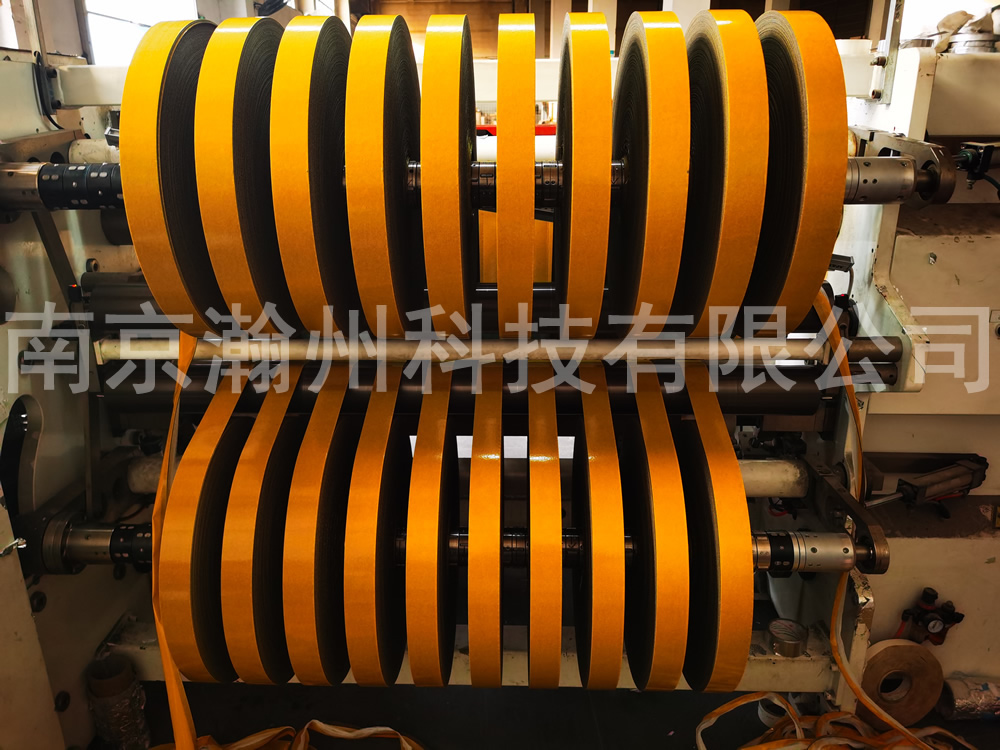
In modern packaging, processing web materials like film, paper, and foil is a precise and complex task. Operations such as slitting, rewinding, and web guiding may seem simple, but they directly determine product quality and production efficiency. In this context, a seemingly minor accessory—cork tape—is playing an increasingly important role.
Cork tape, also known as anti‑slip tape, corkz rubber, or cork rubber tape, is a functional tape made by mixing natural rubber with cork particles. Its surface has a unique non‑slip texture, and its back is coated with pressure‑sensitive adhesive, allowing it to be wound directly onto guide rollers on packaging machinery. The material combines rubber’s elasticity with cork’s friction characteristics, effectively increasing grip between the roller and film while its soft texture prevents scratching. Today, cork tape is widely used on laminators, slitters, printing presses, inspection machines, web guides, and textile equipment.
Cork Tape in Slitting Rewinding Machines
.The slitter is a core machine in packaging, used to cut wide webs into narrower rolls. During slitting, the web runs at high speed over multiple rollers, and tension control accuracy is key to slitting quality. However, slitters face several challenges. First, at high speeds, the web can slip against smooth metal rollers, causing scratches and abrasion—especially critical for high‑gloss or metallized films. Second, rollers develop burrs and pits over time, which can scratch the web and cause surface defects. More seriously, roller slippage leads to uneven tension, resulting in inconsistent slit widths, untidy edges, and problems in subsequent printing registration.
Traditionally, the solution was roller coating—removing the roller and applying a layer of nitrile, neoprene, or polyurethane rubber. This requires specialized handling, is time‑consuming, and expensive (often costing hundreds of thousands of yuan). Local damage often meant replacing the whole roller, increasing costs further. Cork tape offers a simple alternative. Operators clean the roller surface with alcohol, then wrap the tape spirally around it. The pressure‑sensitive adhesive holds it firmly in place, and installation is done online without removing the roller.
In cutting process, cork tape provides: (1) increased friction to prevent slipping; (2) a soft, thick layer that covers roller imperfections and protects the film; and (3) stable friction that ensures even tension, yielding consistent widths and neat edges. Compared with roller coating, cork tape offers better anti‑slip performance at a fraction of the cost. It is now widely adopted by slitter manufacturers and users, especially in BOPP film and metallized film plants.
Cork Tape in Printing Machines
Printing machines—gravure or flexo—are the most technically demanding machines on a packaging line. Their job is to transfer ink precisely onto film to create clear images and text. The friction between the film and guide rollers directly affects registration accuracy and print surface quality. Presses face particularly tough challenges. High‑speed running often causes film slippage on metal rollers, which destabilizes tension—the main cause of misregistration. Gravure printing typically requires registration within ±0.1 mm; even tiny tension changes can throw off multi‑color registration, causing large reject rates. Rollers also develop burrs and scratches over time, which can damage the printed layers—any new scratch means wasted value from all previous printing steps. Additionally, static electricity builds up at high speeds, attracting dust and posing safety risks. Traditional roller coating is costly and requires roller removal and external servicing.
Cork tape provides a clean, efficient fix. After cleaning the roller, operators wrap the tape directly in a spiral pattern—no roller removal, minimal downtime. The tape adheres firmly, its rubber‑cork material increases friction, preventing slip. On one hand, stable friction ensures even tension, which is essential for precise registration. On the other hand, the tape’s thickness and resilience cover roller defects, protecting the printed surface from scratches.
Compared with coating, cork tape is far more convenient and economical. It can be applied online without spare rollers. When worn, it is simply peeled off and replaced—no specialist needed. This “peel‑and‑stick” maintenance minimizes downtime. Today, cork tape is widely used on gravure and flexo presses, becoming a key aid for improving registration accuracy and protecting print quality.
Cork Tape in Web Guiders
A web guide (or guiding system) acts as the “navigation system” on a packaging line. It detects and corrects lateral web wandering, keeping the web on track. Without correction, wandering causes slitting skew, uneven rewinding, and print drift. The system includes sensors, a controller, and an actuator that moves a guiding roller laterally. The friction between the guide roller and the web is critical—if insufficient, the roller's movement won't effectively correct the web, causing lag or failure.
Traditional guide rollers are metal with low friction, especially at high speeds or with low‑friction films. Roller coating has been tried but is costly and complex, and once the coating wears, guiding accuracy drops. Cork tape offers distinct advantages on web guides. Wrapping it on the guide roller significantly increases friction, so every lateral movement transfers accurately to the web, giving faster and more precise correction. The tape is soft, so it doesn’t scratch the film. Its adhesive holds securely even under high speeds and frequent actuation. Maintenance is easy: when the tape wears, simply replace it without removing the roller or calling a specialist. This reduces downtime and lowers costs.
Though seemingly simple, cork tape has a significant impact on packaging quality and efficiency—ensuring even tension and preventing scratches on slitters, protecting printed surfaces and ensuring registration on presses, and improving response and stability on web guides. Compared with traditional roller coating, cork tape not only performs better in anti‑slip but also offers convenience, low cost, and online installation. As China’s flexible packaging industry continues to grow, with rising demands for quality and precision, the use of cork tape will expand, and its value will be increasingly recognized by more packaging enterprises.